

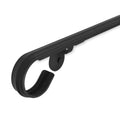
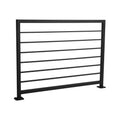
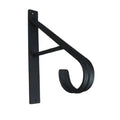

If you’ve ever stood at the bottom of a few outdoor steps wondering what kind of handrail you need, chances are you’ve faced this exact dilemma: single-post or multi-bracket? This question comes up most often with short runs of stairs—like those leading to a porch, patio, or garden path - where a full railing system might feel like overkill. That’s exactly where single-post handrails shine, but they’re not the only option.
In this quick comparison, we’ll break down the pros and cons of each style so you can confidently choose the one that fits your space, your needs, and your budget.
Single-Post Handrails
These are, as the words suggest, handrails supported by a single post—usually positioned either at the beginning or somewhere near the middle of the rail. They offer a clean, minimal look and are designed to provide just enough stability to help you up or down a small set of stairs without cluttering the space.
Pros
-
Clean, Minimalist Look
With just one support post, these handrails blend in easily and don’t overwhelm small staircases or entryways. -
Easy to Install
Fewer parts mean quicker setup - great for DIY projects or when you just need something simple and functional. -
Budget-Friendly Option
Because they use fewer materials and require less labor, single-post handrails are often more affordable than multi-bracket systems. -
Perfect for Short Stair Runs
Ideal for 1–3 steps where full-length railing isn’t needed but some support is still important for safety. -
Less Visual Clutter
Especially useful when you want to preserve the appearance of landscaping or stonework around the stairs.
Cons
-
Limited Support
One post can’t offer the same level of stability as a system with multiple brackets, especially if the handrail is longer or sees frequent use. -
Not Suitable for Long Spans
They’re only practical for very short runs; anything more than a few steps may feel wobbly or fail to meet safety standards. -
May Not Meet Code Requirements
In many areas, building codes require continuous support or specific spacing, which a single-post setup might not satisfy. -
Can Flex or Loosen Over Time
Without multiple anchor points, the handrail might shift or loosen, especially if it’s used often or exposed to weather. -
Limited Design Flexibility
These handrails are usually straightforward and functional, with fewer options for customization or decorative detailing.
Multi-Bracket Handrails
Multi-bracket handrails use several mounting points - usually wall brackets or surface posts - to support the rail along its entire length. While they’re typically seen on longer staircases or ramps, that’s not the focus here. For this comparison, we’ll look at how multi-bracket systems perform on smaller-scale setups, like short outdoor steps, so you can get a clear picture of how they stack up against single-post designs in those everyday situations.
Pros
-
Stronger, More Stable Support
With multiple points of contact, the handrail stays firmly in place—even with regular use or when extra pressure is applied. -
Better Safety and Reliability
Ideal for homes with elderly individuals or young children who need a solid, dependable grip every time they use the steps. -
More Likely to Meet Building Codes
Most local codes require handrails to be supported at specific intervals, which multi-bracket systems easily fulfill. -
Longer Lifespan
Because the weight is distributed evenly, there’s less strain on any single point, helping the entire system last longer. -
Greater Design Flexibility
Multi-bracket setups allow for curved rails, angled runs, or decorative details that are harder to achieve with a single-post design.
Cons
-
More Complex Installation
Requires precise measuring and alignment for each bracket, which can be tricky and time-consuming - especially on uneven surfaces. -
Higher Cost
More materials and longer install time often mean a higher overall price compared to simpler, single-post options. -
Visually Heavier
Multiple brackets can make the setup look bulkier, which might not suit minimal or open outdoor spaces. -
More Maintenance Points
With more brackets, there are more places where screws can loosen or rust over time, requiring occasional tightening or touch-ups. -
May Be Overkill for Short Runs
For just a couple of steps, using multiple brackets might feel excessive and unnecessary depending on the setting.
Read also: Low-Profile Handrail Ideas for Modern Homes
Comparison Overview
| Handrail Type | Installation Complexity | Support & Stability | Code Compliance | Cost | Suitability for Short Runs |
| Single-Post Handrail | Very easy to install; ideal for quick DIY jobs | Basic support, best for 1-3 steps; can flex under pressure. |
May not meet all code requirements, especially for the public |
Affordable due to fewer parts and faster installation. |
Specifically designed for short runs of steps |
| Multi-Bracket Handrail | More involved installation; needs precise bracket spacing | Very strong and stable; suitable even for heavy use. |
More likely to comply with building regulations. |
More expensive due to additional materials and labor. |
Sometimes excessive for short spans but offers extra security. |
Conclusion
So, which is best? That really depends on what you need. I hope this comparison gave you a clear and practical breakdown to help you decide for yourself. Whether you prefer the simplicity and clean look of a single-post handrail or the added strength and structure of a multi-bracket setup, you now have the pros and cons laid out.
And when you’re ready to take the next step, head over to our website and contact us. You’ll find a range of handrails to match your space, your style, and your budget.


