


Architectural railing systems transform functional safety barriers into design statements that define spaces and enhance building aesthetics. This guide explores how architectural railings, guardrails, and handrails serve as both structural necessities and sculptural elements in contemporary architecture.
What Are Architectural Railing Systems?
Architectural railing systems represent the intersection of engineering requirements and design intent. Unlike standard safety railings that merely satisfy building codes, architectural railings function as deliberate design elements that contribute to a building's visual language and spatial character.
An architectural railing system encompasses all components that work together to create both safety barriers and aesthetic statements: posts, top rails, infill panels or pickets, mounting hardware, and handrails. The designation "architectural" signifies that these systems receive the same design consideration as windows, doors, and other architectural features rather than being treated as afterthoughts or purely functional additions.
Key characteristics of architectural railing systems:
-
Design integration: The railing design coordinates with the building's overall architectural style, material palette, and visual rhythm
-
Material quality: Architectural systems use premium materials selected for both durability and appearance
-
Custom fabrication: Many architectural railings involve custom design and fabrication to achieve specific aesthetic goals
-
Engineered performance: Beyond meeting minimum code requirements, architectural systems often exceed structural standards
-
Finish quality: Professional finishing techniques ensure the railings maintain their appearance over decades
At SI Handrails, we approach every railing as an architectural element. Our fabrication process using US-manufactured steel and professional powder coating delivers the finish quality and structural precision that architectural applications demand. Whether creating minimalist horizontal bar systems for contemporary homes or ornamental patterns for traditional architecture, we recognize that railings shape how people experience and move through spaces.
Railings as Architectural Statements
The evolution from purely functional barriers to architectural features reflects broader changes in how we design buildings and spaces. Contemporary architecture increasingly recognizes that every visible element - including railings - contributes to the building's identity and the occupant's experience.
Railings define spatial boundaries without creating walls. An open-plan home uses railings to delineate the stair zone while maintaining visual connection between floors. A rooftop deck employs railings to preserve views while establishing safe edges. The railing becomes the architecture - the element that defines where one space ends and another begins.
Railings create visual rhythm and movement. Repeating vertical pickets establish rhythm along a balcony length. Horizontal bars direct the eye laterally across a facade. The pattern, spacing, and orientation of railing elements generate visual movement that animates otherwise static surfaces.
Railings frame views and direct attention. A carefully designed railing system frames specific views while screening less desirable sightlines. The top rail height, infill transparency, and post placement all influence what occupants see and where their attention focuses.
Railings express material character. Steel carries precision and strength. The material choice communicates specific design intentions about the building's character and the design priorities. For insight into how wrought iron has shaped architectural expression across centuries, explore our article on the history of wrought iron in architecture and design.
Categories of Architectural Railing Systems
|
System Type |
Primary Application |
Design Character |
|
Interior Stair Railings |
Residential and commercial staircases |
Statement piece, visual anchor |
|
Exterior Guardrails |
Balconies, decks, terraces |
Weather-resistant, view preservation |
|
Balustrade Systems |
Grand stairs, mezzanines |
Ornamental, traditional |
|
Wall-Mounted Handrails |
Corridors, accessible routes |
Functional elegance, ADA compliance |
Each category serves specific functional requirements while offering distinct aesthetic possibilities. The selection depends on the building context, design goals, and performance requirements.
Design Principles for Architectural Railings
1. Proportion and Scale
Railing height, post spacing, and infill density must relate proportionally to the surrounding architecture. A railing that appears appropriately scaled on a two-story residential foyer may read as undersized on a four-story commercial atrium. The railing dimensions should correspond to the volume of space they occupy and the viewing distances involved.
Rule of thumb: Post spacing between 4-6 feet maintains visual rhythm without appearing too busy or too sparse. Infill spacing (between pickets or bars) at 3-4 inches satisfies code requirements while maintaining appropriate visual density.
2. Material Honesty
Architectural railings should express their material character rather than imitating other materials. Steel railings benefit from crisp geometry and clean lines that showcase the material's strength and precision. The material selection should align with the architectural intent rather than attempting to simulate something else.
3. Visual Weight and Transparency
The railing's visual weight - how solid or transparent it appears - significantly affects the space. Solid panel railings create enclosure and privacy. Widely spaced vertical pickets maintain openness. The choice depends on the spatial goals.
Transparency considerations:
High transparency: Widely spaced vertical bars preserve views and maintain spatial openness
Medium transparency: Standard vertical pickets at 3-4 inch spacing balance safety with reasonable visibility
Low transparency: Closely spaced ornamental patterns prioritize privacy or decorative presence over visibility
4. Integration with Architectural Language
Successful architectural railings speak the same design language as the building. A contemporary home with flat roofs, large windows, and minimal trim details pairs naturally with simple steel railings featuring clean lines and matte black finishes. A Victorian residence with ornate trim and decorative brackets coordinates better with railings incorporating scrollwork or geometric patterns.
Design compatibility matrix:
|
Architectural Style |
Compatible Railing Approaches |
|
Modern/Contemporary |
Minimal steel, horizontal bars, floating handrails |
|
Traditional/Colonial |
Ornamental iron, balustrades, decorative patterns |
|
Industrial/Urban |
Raw steel, exposed fasteners, utilitarian detailing |
|
Craftsman/Arts & Crafts |
Simple geometry, square balusters, honest joinery |
|
Mediterranean/Spanish Colonial |
Wrought iron with scrollwork, decorative patterns |
|
Mid-Century Modern |
Thin steel profiles, geometric patterns |
Looking for specific design direction? Our collection of modern stair railing ideas demonstrates how contemporary railing systems coordinate with various architectural styles.
Architectural Metal Railings: Material Advantages
Metal railings dominate architectural applications due to their combination of structural efficiency, design flexibility, and longevity. The material allows thin profiles that minimize visual bulk while providing necessary strength.
Structural Efficiency
Metal's high strength-to-weight ratio permits elegant, minimal designs. A steel handrail measuring 1.5 inches square provides adequate structural capacity while maintaining a refined appearance. This efficiency matters particularly for cantilevered or long-span railings where minimizing weight reduces structural demands on the supporting floor or deck.
Design Flexibility
Steel fabrication accommodates:
-
Custom curves and radiused sections
-
Precise geometric patterns
-
Variable heights and profiles along a single run
-
Complex three-dimensional geometry
The material can be cut, bent, welded, and finished to achieve virtually any design intent. This flexibility explains why metal railings appear across all architectural styles from ultra-modern to historically inspired.
Finish Options
Powder coating: Electrostatically applied coating provides durable, weather-resistant finish in any color. Matte black remains most popular for its versatility and ability to recede visually or create dramatic contrast depending on the context. Professional powder coating delivers 15-20 years of service with minimal maintenance.
Custom colors: Powder coating technology allows matching any color specification, enabling coordination with specific architectural color palettes.
At SI Handrails, we apply professional powder coating at optimal thickness (2-3 mils) to ensure longevity while maintaining clean lines. The finish quality directly affects how the railing reads visually - premium finishes appear uniform and smooth, while budget finishes show texture variations and less consistent color.
Designing with Architectural Handrails
Wall-mounted handrails represent a distinct category within architectural railing systems. These elements serve critical accessibility functions while offering opportunities for refined design expression. The handrail becomes a continuous sculptural element that guides movement through the building.
Design Opportunities
Profile: The handrail cross-section significantly affects user experience and visual character. Round profiles at 1.5-1.75 inch diameter provide comfortable grip for most users. Square or rectangular profiles at similar dimensions offer more contemporary aesthetics while maintaining adequate grip surface.
Material expression: Handrails provide opportunity for material presence - steel handrails create clean lines and contemporary character while offering the tactile experience that users physically contact.
Continuous vs. bracketed: Traditional handrails mount with visible brackets at regular intervals. Contemporary applications often use concealed mounting that creates the appearance of a floating handrail. This detail choice substantially affects the perceived refinement.
Terminal details: How the handrail ends at top and bottom influences the overall design quality. Returns to the wall or integration into posts create different visual impressions.
For detailed exploration of wall-mounted handrail design possibilities, see our guide to modern and elegant wall-mounted handrail ideas.
Exterior Architectural Railings: Performance and Aesthetics
Exterior railings face environmental exposure that interior systems avoid - UV radiation, temperature cycles, precipitation, humidity, salt spray in coastal areas. Architectural exterior railings must maintain both structural integrity and aesthetic quality despite these stresses.
Material Selection for Exterior Use
Powder-coated steel: The most cost-effective solution for exterior architectural railings. Professional powder coating resists UV damage and moisture penetration when properly applied. Coastal installations benefit from additional preparation including galvanizing or zinc-rich primers beneath the powder coat.
Design Considerations for Exterior Railings
Weather protection: Consider how water sheds from horizontal surfaces. Flat top rails collect water that accelerates corrosion. Sloped or rounded tops shed water more effectively.
View preservation: Exterior railings on decks and balconies often serve properties with desirable views. The railing design should frame views rather than obstruct them. Minimal steel bars maintain transparency while satisfying safety codes.
Our article on types of handrails for outdoor steps provides additional guidance on selecting and detailing railings for exterior applications where weather resistance and longevity matter most.
Ornamental vs. Minimalist Approaches
Contemporary architectural railing design operates along a spectrum from ornamental complexity to minimalist reduction. Neither approach is inherently superior - the appropriate choice depends on the architectural context and design goals.
Ornamental Architectural Railings
Ornamental railings incorporate decorative patterns, scrollwork, or geometric arrangements that add visual richness. These systems work particularly well in:
-
Historic restoration projects matching original detailing
-
Traditional architectural styles (Colonial, Victorian, Mediterranean)
-
Residential entries and grand staircases where railings serve as focal points
Common ornamental patterns:
-
Diamond configurations: Repeating diamond shapes created by intersecting bars
-
Circle and ring details: Circular elements incorporated into vertical picket arrangements
-
Geometric patterns: Regular arrangements of squares, rectangles, or other shapes
At SI Handrails, we fabricate ornamental patterns including diamond and circle designs that balance traditional detailing with contemporary execution. Our modern manufacturing techniques deliver the visual character of historical ironwork with the consistency and durability advantages of current materials and finishes. For specific pattern inspiration, explore our article on simple iron railing designs for staircases.
Minimalist Architectural Railings
Minimalist systems reduce railings to essential elements - straight lines, simple geometry, minimal visible fasteners. This approach dominates contemporary architecture and suits:
-
Modern and contemporary building styles
-
Spaces where the railing should recede to emphasize other elements
-
Applications prioritizing view preservation
Minimalist design strategies:
-
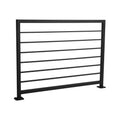
Horizontal bars: Simple horizontal members spaced to meet code, creating linear rhythm
-
Vertical pickets: Plain vertical elements without decorative capital or base details
-
Single top rail: Wall-mounted handrail without visible supports or infill
The minimalist approach demands exceptional execution quality since there are no decorative elements to distract from fabrication or installation imperfections. Material joints must align precisely, welds must be ground smooth and invisible, and finishes must appear uniform without texture variation.

Custom Fabrication for Architectural Projects
Architectural railing projects often require custom fabrication to achieve specific design goals and accommodate unique building geometry.
Custom Fabrication Advantages:
-
Complete design freedom to achieve specific aesthetic goals
-
Accommodation of unusual building geometry or dimensional requirements
-
Integration with unique architectural details
-
Material and finish selection unrestricted by standard options
-
Creation of signature design elements unique to the project
Custom Fabrication Considerations:
-
Higher cost per linear foot compared to standard systems
-
Longer lead times for design, engineering, and fabrication
-
Greater coordination required between architect, fabricator, and installer
At SI Handrails, we fabricate steel railings to order for each project, allowing dimensional customization and finish selection while maintaining competitive pricing through efficient fabrication processes. This approach delivers architectural quality without the premium costs associated with fully custom one-off designs.
Making Railings Architectural: Final Principles
Transforming functional railings into architectural elements requires intentional design decisions throughout the process:
Consider the railing from the earliest design phases. Railings integrated into the architectural concept from the beginning appear more resolved than railings added late as afterthoughts. The railing design should inform and be informed by other architectural decisions - material palette, spatial organization, circulation patterns.
Detail the transitions and terminations carefully. How railings connect to floors, walls, and posts significantly affects the perceived quality. Refined details - returns to walls, integrated posts, concealed fasteners - elevate standard railings to architectural status.
Select materials and finishes that will age appropriately. Consider how the railing will appear not just when new but after years of use and exposure. Powder-coated steel develops character while maintaining structural integrity and protective qualities.
Maintain consistency within the project while allowing hierarchy. Not every railing needs equal design investment. Feature stairs visible from main spaces merit more refined detailing. Secondary locations can use simpler versions that maintain material and finish consistency.
Work with fabricators who understand architectural intentions. Quality fabrication executes the design intent accurately. Poor fabrication - visible welds, inconsistent finishes, imprecise dimensions - undermines even excellent designs.
At SI Handrails, three generations of fabrication experience have taught us that architectural railings demand different standards than purely functional systems. We approach every project recognizing that the railings we fabricate become permanent parts of the buildings and homes we serve. This perspective guides our material selection, fabrication techniques, and quality standards - ensuring that railings function as architecture, not just as safety barriers.
For projects involving decorative ironwork beyond railings, our guide to wrought iron gate design inspiration demonstrates how architectural metalwork creates cohesive design statements across building elements.


