


Not everyone wants an elaborate railing system, and maybe you're on a tight budget but still want safety around your home. Whether you're dealing with insurance requirements, aging family members, or simply want peace of mind on icy winter mornings, building a simple outdoor handrail doesn't have to break the bank or require advanced carpentry skills.
I've seen countless families put off adding handrails because they think it's either too expensive or too complicated. The truth is, with some basic tools and a free weekend, you can build a sturdy, code-compliant handrail for under $100 in most cases. Let me share some straightforward options that real people have successfully built for their homes.
Option 1: Simple Wooden Handrail for Front Porch Steps (3-5 Steps)
Best For: Traditional homes, budget-conscious projects, 2-5 steps Cost: $60-80 Time: 4-6 hours Skill Level: Beginner
This classic approach works great for front porches where you want something that matches your home's style without fancy details.
What You'll Need:
-
Two 4x4 pressure-treated posts (8 feet each - you'll cut to size)
-
One 2x4 pressure-treated board for the handrail (length depends on your steps)
-
Galvanized carriage bolts (1/2" x 6")
-
Washers and nuts
-
Galvanized screws
-
Basic tools: drill, level, saw, measuring tape
The Process:
-
Measure and Plan: Standard handrail height is 34-38 inches from the step nosing. Measure the angle of your steps - most are around 30-35 degrees.
-
Position Posts: Place one post at the top step (notched to fit against the stringer) and one at the bottom. The key trick here is that the posts don't have to be identical lengths - they just need to support a level handrail at the correct height.
-
Secure the Framework: Bolt posts directly to the side of your stringers using carriage bolts. This is much more secure than trying to mount to the step surfaces.
-
Add the Handrail: Cut your 2x4 to span between posts at the measured angle. Secure with galvanized screws.
Pro Tip: Start with the bottom and middle posts, connect the handrail to those, then use the handrail itself as a guide for positioning and cutting the top post to exact length. This eliminates measurement errors.
Option 2: Metal Pipe Handrail for Back Patio Steps
Best For: Modern homes, high durability needs, wet conditions Cost: $80-120 Time: 3-4 hours Skill Level: Beginner-Intermediate
Metal pipe railings offer incredible strength and weather resistance, plus they look clean and contemporary.
What You'll Need:
-
Galvanized steel pipes (1" or 1-1/4" diameter)
-
Floor flanges for mounting
-
Elbow fittings for angles
-
Tee fittings for connections
-
Concrete anchors or wood screws (depending on your steps)
-
Pipe thread sealant
The Process:
-
Design Your Layout: Sketch your steps and plan post locations. For pipe railings, you can use the formula from geometry (a² + b² = c²) to calculate the exact handrail length needed.
-
Choose Your Mounting Style:
-
For concrete steps: Use masonry anchors and floor flanges
-
For wooden steps: Screw flanges directly to the structure
-
For side mounting: Attach to the face of the stairs instead of the top
-
Assembly: The beauty of pipe systems is that they thread together like plumbing. No welding required - just proper measurement and threading.
-
Finishing: Many people paint galvanized pipe with oil-rubbed bronze or black paint for a custom look.
Why This Works: Pipe systems are incredibly forgiving. If you make a measurement error, you can usually adjust with different fittings rather than starting over.
Option 3: Kit-Based Solutions for Various Scenarios
Best For: Maximum simplicity, guaranteed fit, first-time builders Cost: $100-200 Time: 1-3 hours Skill Level: Beginner
Several companies now offer pre-engineered handrail kits that take the guesswork out of the project.
Stair Rail Kits:
-
Available in lengths from 1-2 steps up to 6+ steps
-
Include all mounting hardware and detailed instructions
-
Often adjustable for different angles and heights
-
Some can be trimmed to fit unusual dimensions
Wall-Mounted Kits:
-
Perfect for 2-5 foot straight runs
-
Mount directly to concrete or wood surfaces
-
Available in both traditional and modern styles
The Trade-Off: Kits cost more upfront but eliminate the trial-and-error of custom building. For many people, the time savings and guaranteed results are worth the extra expense.
Read also: Step-by-Step Guide: How to Attach a Handrail to a Wall
Option 4: Affordable Wrought Iron Handrails
Best For: Durability, classic elegance, long-term value Cost: $150-300 Time: 2-3 hours Skill Level: Beginner-Intermediate
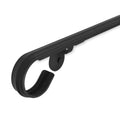
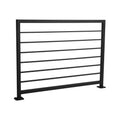
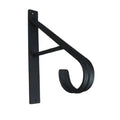
While custom wrought iron can be expensive, there are now affordable pre-made options that give you the strength and beauty of wrought iron without the custom price tag.
Why Choose Wrought Iron:
-
Unmatched Durability: Properly finished wrought iron can last decades with minimal maintenance
-
Classic Appeal: Works with both traditional and modern home styles
-
Superior Strength: Exceeds code requirements for load-bearing capacity
-
Weather Resistance: When properly coated, handles all weather conditions better than wood
What You'll Need:
-
Pre-made wrought iron handrail sections
-
Mounting brackets designed for your installation type
-
Appropriate anchors (concrete anchors for masonry, lag bolts for wood)
-
Level and basic drilling tools
The Process:
-
Measure Your Space: Most pre-made sections come in standard lengths that can be cut to fit if needed
-
Choose Your Style: Options range from simple straight rails to decorative scrollwork
-
Plan Mounting Points: Wrought iron's strength allows for fewer mounting points than other materials
-
Installation: Follow manufacturer instructions for your specific mounting situation
Where to Find Quality Options:
At SI Handrails we offer affordable wrought iron handrail options that combine traditional craftsmanship with modern convenience. Our pre-made sections come with quality guarantees and are designed for straightforward DIY installation, giving you professional results without the custom installation cost.
The Trade-Off: Slightly higher upfront cost than basic wood or pipe, but the longevity and minimal maintenance often make wrought iron the most economical choice over time.
Situation-Specific Recommendations
Front Porch (Formal Appearance Needed)
Go with the wooden handrail approach using traditional 4x4 posts and 2x4 rails. Consider adding simple spindles between posts if your budget allows. This creates the classic look that works with most home styles and satisfies both safety and aesthetic needs.
Back Patio (Function Over Form)
Metal pipe railings are your friend here. They're incredibly durable, handle weather well, and the industrial look actually complements many outdoor settings. Plus, they're often easier for beginners because pipe fittings are more forgiving than precise wood cuts.
Just 1-3 Steps (Minimal Installation)
Consider a simple wall-mounted handrail that attaches to your house wall and extends down along the steps. This requires fewer materials and mounting points while still providing essential safety support.
Long Staircase (6+ Steps)
This is where kits really shine. The longer your staircase, the more critical proper engineering becomes for both safety and appearance. Pre-engineered kits ensure you get proper intermediate support posts and correct spacing.
Concrete Steps
Metal systems generally work better here because mounting to concrete requires specific anchors and drilling techniques. Pipe systems with floor flanges make this straightforward, while wooden posts require more complex mounting solutions.
Wooden Deck Stairs
This is the natural home for wooden handrails. You can often integrate with existing deck railing posts or stringers, making the whole project simpler and more cohesive with your existing structure.
Code Compliance Made Simple
Every handrail project needs to meet basic safety codes, but these requirements are more straightforward than many people think:
Height: 34-38 inches from the step nosing to the top of the handrail Graspability: Handrails should be 1.25-2 inches in diameter (or equivalent for non-circular shapes) Clearance: At least 1.5 inches between the handrail and any wall Strength: Must withstand 200 pounds of force in any direction Extensions: Should extend 12 inches beyond the top step and one tread depth beyond the bottom
Budget Breakdown by Option
Basic Wooden Rail: $60-80
-
Pressure-treated lumber: $30-40
-
Hardware (bolts, screws): $15-20
-
Miscellaneous (sandpaper, stain): $15-20
Pipe Rail System: $80-120
-
Galvanized pipes and fittings: $50-70
-
Mounting hardware: $20-30
-
Paint/finish (optional): $10-20
Wrought Iron Handrails: $150-300
-
Pre-made wrought iron sections: $120-250
-
Mounting hardware: Usually included
-
Installation accessories: $30-50
Pre-Made Kits: $100-200
-
Kit with all components: $80-150
-
Installation hardware: Usually included
-
Special tools (if needed): $20-50
Tools You'll Actually Need
Don't let tool requirements intimidate you. Most simple handrail projects need:
Essential:
-
Drill with bits
-
Level
-
Measuring tape
-
Saw (circular saw or hand saw)
Helpful:
-
Speed square for angles
-
Socket wrench set
-
Pipe wrench (for pipe projects)
Nice to Have:
-
Angle grinder (for metal cutting)
-
Hammer drill (for concrete)
Most of these tools can be borrowed or rented if you don't own them, keeping your project costs down.
Read also: Handrail Installation: A Complete DIY Guide
Common Mistakes to Avoid
Measurement Errors: Double-check all measurements, especially angles. It's much easier to measure twice and cut once than to remake components.
Wrong Hardware: Use galvanized or stainless steel hardware for outdoor projects. Regular steel will rust and fail.
Inadequate Mounting: Your handrail is only as strong as its weakest mounting point. Don't skip proper anchors or fasteners.
Ignoring Codes: Basic code compliance isn't optional - it's about safety. When in doubt, check with your local building department.
When to Call a Professional
While many handrail projects are DIY-friendly, some situations call for professional help:
-
Complex curved or angled staircases
-
Structural modifications to existing stairs
-
Local codes requiring professional installation
-
Integration with complex existing railing systems
The Bottom Line
Building a simple outdoor handrail is one of those projects that delivers massive value for minimal investment. You're not just adding a safety feature - you're creating peace of mind for everyone who uses your steps, from young children to elderly relatives to guests unfamiliar with your home.
The key is choosing the right approach for your situation. A simple wooden rail might be perfect for your front steps, while a pipe system could be ideal for your back patio. Don't overthink it - safety and function matter more than perfection.
At SI Handrails, we love seeing families take on these projects and succeed. We're always happy to provide guidance for DIY projects too. Visit our website for more detailed installation guides, or reach out if you have questions about your specific situation. Sometimes a quick conversation can save you hours of head-scratching and ensure your project goes smoothly from start to finish.


