


Trends change. Interior design evolves. If you're into modern updates, considering renovating your staircase, or planning to install new railings, this article can serve as your inspiration guide for 2026. We've gathered the latest predictions, analyzed what's emerging in interior design, and translated those trends into practical railing ideas that will keep your home looking current and stylish.
Whether you're building new, renovating, or simply refreshing your space, understanding what's modern helps you make decisions that won't feel dated in a few years. Let's explore what 2026 has in store for stair railings.
Understanding 2026 Interior Design Trends
Before diving into specific railing ideas, let's look at the broader interior design trends shaping 2026:
The Return of Depth and Character: After years of all-white minimalism, interiors are embracing depth, texture, and architectural detail. This means railings can be more substantial, more detailed, and more integrated into the overall design rather than trying to disappear.
Curves and Organic Forms: Straight lines dominated for years, but 2026 sees the rise of curves, soft edges, and flowing forms. We're seeing more curved handrails and organic shapes in balusters.
Texture as Luxury: Combining different textures creates visual richness. For railings, this translates to mixing materials thoughtfully: wood with metal, glass with wrought iron, matte finishes with polished accents.
Artisanal and Handcrafted Elements: Mass-produced uniformity is out. One-of-a-kind pieces with visible craftsmanship are in. This aligns perfectly with what we do at Steel Impressions: custom metalwork with hand-forged details.
15 Modern Stair Railing Ideas for 2026
1. Wrought Iron with Wood Handrails
This combination has been in our portfolio for years, and there's a reason it never goes out of style: it just keeps evolving. We're pairing the strength and artistry of wrought iron balusters with warm wooden handrails, and honestly, it's one of our favorite requests because it works in almost any home.
The contrast between materials adds dimension that you just can't get from a single-material railing. The metal provides that structural elegance and visual interest, while the wood brings warmth and comfort to grip. We've done this in transitional homes, modern farmhouses, and even contemporary spaces that need just a touch of organic warmth.
What makes this work in 2026: People are craving that balance between modern edge and traditional warmth. You're not going all-in on cold minimalism, but you're also not stuck in heavy traditional design. It's that perfect middle ground.
Our take: This is on the list because we genuinely believe it's one of the most versatile combinations out there. Whether you go with walnut for richness, oak for tradition, or maple for lighter spaces, pairing it with wrought iron elevates both materials.
2. Glass Panels with Wrought Iron Frames
We're seeing a huge surge in requests for glass panel railings, and we love working with this combination. Tempered glass panels framed in wrought iron offer that modern transparency while the metal adds structure and—let's be honest—a lot more visual interest than plain frameless glass.
The beauty here is that glass maximizes light flow and creates openness, which is crucial in modern design where people want their spaces to feel larger and brighter. But here's where wrought iron really shines: those frames can be as simple and modern as you want, or we can include some subtle scrollwork for homes that lean more traditional.
What makes this work in 2026: Light, light, light. Modern homes are all about bringing in natural light and maintaining sightlines. Glass does that. But unsupported glass can feel a bit stark—adding wrought iron frames gives it structure and makes it feel intentional, not just like a see-through barrier.
Our take: This is especially perfect for staircases near windows or in open-concept homes where you don't want to block the view. We've installed these in contemporary lofts and traditional homes alike, and they work beautifully in both.
Want to learn more about glass railings? Read our article to see if they’re right for your home
3. Matte Black Wrought Iron with Minimalist Design
If there's one finish that's absolutely dominating right now, it's matte black. We're talking clean-lined wrought iron in that sophisticated matte black finish that embodies contemporary design while still feeling timeless.
Black adds drama and definition without being visually heavy, which is the trick. And the matte finish (as opposed to glossy or shiny) feels current and refined. It's not trying too hard. When you pair this with minimal design (simple vertical balusters, clean posts, no excessive ornamentation), you get something that looks expensive and intentional.
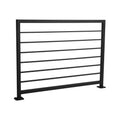
Check our bestselling Black Modern Horizontal Iron Railings
What makes this work in 2026: Contrast is back. After years of tone-on-tone everything, people want definition. Matte black railings against white or neutral walls create that architectural moment that makes a staircase feel designed rather than just functional.
Our take: This is on the list for a reason—we genuinely think matte black wrought iron with minimal design is going to stay relevant for the next decade. It's modern but not trendy. We're recommending this to clients who want something current without worrying it'll feel dated in five years.
4. Mixed Metal Tones
Here's where things get interesting. We're combining different metal finishes (maybe matte black wrought iron posts with brass or copper accents) to create that layered, curated look that feels high-end without being matchy-matchy.
This is a designer trick that adds serious sophistication. Instead of everything being the same finish (which can read as builder-grade or uninspired), mixing metals feels intentional and collected. We've done matte black frames with brushed brass handrail brackets, or oil-rubbed bronze posts with copper accent details.
What makes this work in 2026: The "everything must match perfectly" rule is dead. Good design now is about thoughtful combinations and layering. Mixed metals throughout a home (kitchen fixtures, bathroom hardware, light fixtures) have been trending, and now that's extending to railings.
Our take: We love this trend because it lets us get creative with finishes and details. But here's our honest advice: mixed metals work when they're intentional, not accidental. You need a plan. Random mixed finishes just look like mistakes.
5. Vertical Wrought Iron Balusters with Clean Lines
Simple vertical lines. That's it. Square or rectangular profile balusters in consistent vertical lines creating modern elegance without any fuss. This is minimalism done right, and it's been one of our most requested designs lately.
Vertical lines draw the eye upward, which is fantastic for making spaces feel taller. The clean profiles feel contemporary while wrought iron provides the durability and substance that cheaper materials just can't match. It's understated but impactful.
What makes this work in 2026: Modern doesn't mean weak or insubstantial anymore. People want clean design, yes, but they also want quality. Vertical wrought iron balusters deliver both—simple enough to feel modern, substantial enough to feel permanent and valuable.
Our take: This is absolutely on the list because we think it's the smart choice for modern homes and small spaces. The vertical emphasis makes rooms feel taller and more open. We're big believers in letting good materials speak for themselves rather than over-designing everything.
6. Wrought Iron with LED Lighting Integration
Technology meeting tradition: this is where we're seeing exciting innovation. We're integrating LED strips under handrails or along posts, combining function with serious ambiance. These can be controlled remotely, adjusted for different moods, and honestly, they transform a staircase from purely functional to an architectural feature.
The lighting improves safety (which is huge for stairs), but it also creates atmosphere. Warm LED under a handrail creates this subtle glow that makes nighttime trips upstairs feel luxurious instead of utilitarian.
What makes this work in 2026: Smart home integration is everywhere, and railings should be part of that conversation. This isn't about making railings "tech-y" for tech's sake—it's about genuinely useful integration that improves daily life.
Our take: We're enthusiastic about this one because we've seen the before-and-after reactions from clients. Adding lighting completely changes how they experience their stairs. This is on the list because it's practical innovation, not just trendy.
Read also: How to Add LED Lighting to Your Handrails for Safety and Style
7. Curved Wrought Iron Handrails
Flowing, curved handrails that follow organic lines rather than straight edges. We're talking about railings that curve and flow, following the natural movement of walking up stairs rather than rigid straight lines.
Curves are having a major moment in 2026, and honestly, we're here for it. A curved wrought iron handrail adds sculptural interest and feels contemporary while maintaining traditional craft. It's softer, more inviting, and frankly more interesting to look at than perfectly straight lines.
What makes this work in 2026: After years of rigid geometry and sharp corners everywhere, there's this collective craving for softer, more organic forms. Curves feel human and welcoming in ways that pure geometry doesn't.
Our take: This is on the list because we think the curve trend has real staying power. It's not just a flash-in-the-pan aesthetic preference—it's a return to forms that feel natural and comfortable. We especially love curved handrails on curved staircases where everything flows together.

8. Horizontal Wrought Iron Rails
Instead of traditional vertical balusters, we're seeing horizontal bars or cables creating modern, uncluttered lines. The horizontal emphasis creates this completely different visual effect: your eye travels along rather than up and down, which creates a sense of calm and openness.
This works beautifully in modern and contemporary homes, but we've also done it in coastal interiors where that horizontal orientation echoes the horizon line. It's clean, it's sophisticated, and it maintains sightlines in ways that vertical balusters sometimes don't.
What makes this work in 2026: Open sightlines are premium now. People want to see through their spaces, not have their views blocked. Horizontal rails do this while still providing the necessary safety barrier.
Our take: We're recommending this more and more, especially for clients with great views or open-concept layouts. It's on the list because it fundamentally changes how a railing functions in a space—from visual barrier to transparent boundary.
9. Wrought Iron with Stained or Textured Glass Inserts
Decorative glass panels (etched, frosted, or stained) set within wrought iron frames. This is where art meets function, and we absolutely love these projects because every one is unique.
The glass adds color and light filtering that you just can't get from solid materials. Meanwhile, the wrought iron frames provide structure and that handcrafted quality. Together, they create artistic focal points that transform staircases into gallery moments.
What makes this work in 2026: Personalization is luxury now. Custom, one-of-a-kind details that make your home uniquely yours are more valuable than any mass-produced "luxury" item. These glass-and-iron combinations let you express personal style in ways that standard railings never could.
Our take: This is on the list because we think it represents where design is headed—away from generic and toward meaningful customization. These aren't for everyone, but for the right home and the right client, they're spectacular.
10. Laser-Cut Wrought Iron Panels
Technology meets traditional craft in the best way. We're using laser cutting to create intricate patterns in wrought iron panels that would be impossible (or prohibitively expensive) with traditional forging alone.
The beauty here is that laser cutting allows truly custom patterns: geometric, organic, abstract, whatever you envision. Each design can be one-of-a-kind, tailored to your home and your aesthetic. It's modern fabrication in service of artisanal results.
What makes this work in 2026: People want both precision and artistry. Laser cutting delivers patterns with perfect accuracy while still creating pieces that feel handcrafted and special. It's the best of both worlds.
Our take: We're excited about this because it opens up design possibilities that didn't exist for previous generations of metalworkers. This is on the list because it represents innovation while respecting craft tradition. You can have incredibly detailed patterns that would take hundreds of hours to hand-forge, made feasible through technology.
11. Wrought Iron with Natural Wood Posts
Flipping the typical combination: instead of wood handrails with metal balusters, we're doing natural wood posts (thick, substantial, character-rich wood) paired with wrought iron handrails and infill.
The wood posts become these warm, grounding elements while the wrought iron provides the actual railing structure. It's unexpected, it's visually interesting, and it brings serious warmth to modern metal designs.
What makes this work in 2026: Mixing materials in unexpected ways is what distinguishes thoughtful design from cookie-cutter installations. This combination says you made intentional choices rather than just ordering whatever's standard.
Our take: This is on the list because we're seeing it requested more often, and we think it's going to keep growing in popularity. It's especially great for homes that want modern structure but don't want to lose that organic, natural element entirely.
12. Geometric Pattern Wrought Iron
Custom geometric patterns in the railing infill (think triangles, hexagons, angular repeating motifs) creating visual rhythm and modern artistic detail.
These aren't your grandmother's scrollwork patterns. We're talking clean, angular, contemporary geometry that feels fresh and current. The patterns create visual interest without feeling fussy or overly ornate.
What makes this work in 2026: Geometric patterns hit that sweet spot between artistic detail and modern simplicity. They're decorative without being traditional, interesting without being busy.
Our take: This is on the list because we genuinely believe geometric patterns are going to be one of the defining looks of modern wrought iron in the coming years. They let us show off metalworking skill while staying firmly in contemporary design territory.
13. Wrought Iron in Bold Colors
Powder coating has opened up essentially unlimited color options, and we're seeing more clients embrace bold railing colors: deep navy, forest green, burgundy, even coral or teal in the right contexts.
This is your chance to make a statement. Instead of defaulting to black or bronze, why not choose a color that coordinates with your home's palette and adds personality? A deep navy wrought iron railing against white walls? Stunning. Forest green in a home with lots of natural wood? Perfect.
What makes this work in 2026: Color is back. After the beige-and-gray years, people are ready for actual color in their homes again. Railings are a great place to introduce it because they're substantial enough to make impact but not overwhelming like colored walls.
Our take: We're enthusiastic about this trend because it lets personality shine through. This is on the list because we think it represents a broader shift toward homes that feel personal and expressive rather than trying to appeal to some generic buyer down the road.
14. Wrought Iron with Floating Wood Treads
When you pair open riser stairs (floating wood treads with no vertical risers) with wrought iron railings, you get this incredibly modern, light aesthetic. The stairs feel like they're floating, and the wrought iron provides necessary structure without adding visual weight.
This is especially popular in lofts, contemporary homes, and renovations where people want to maintain openness and light flow. The combination of natural wood treads and industrial metal creates that perfect modern-organic balance.
What makes this work in 2026: Transparency and lightness are premium. Closed-riser staircases can feel heavy and block light. This open approach lets light flow through while still being structurally sound and code-compliant.
Our take: This is on the list because it represents a fundamental shift in how we think about staircases: from solid, heavy structures to lighter, more transparent architectural features. We love how it showcases both the wood and the metal without either material overwhelming the other.
15. Matte Black and Matte White Combination
One of the most sophisticated looks we're doing right now: matte black wrought iron posts and structural elements with matte white powder-coated infill panels or balusters. It's monochromatic but far from boring.
The contrast is subtle (both finishes are matte, so they have the same sheen level) but the black-and-white creates definition and architectural interest without introducing color. It's sophisticated without being stark.
What makes this work in 2026: Monochromatic interiors are trending, but people want depth through finish and texture rather than color. This black-and-white combination delivers that depth while maintaining a cohesive, refined palette.
Our take: This is on the list because we think it's subtle sophistication done right. It works in modern spaces, it works in traditional spaces painted white, and it works in monochromatic interiors where you want architectural interest without introducing competing colors.
What's Out for 2026
Knowing what to avoid is as important as knowing what's trending:
Overly Ornate Scrollwork: Excessive, fussy decorative elements feel dated. If using scrollwork, keep it restrained and intentional.
Builder-Grade Wood Spindles: Basic, uniform wood balusters without character or detail look generic and cheap.
All-White Everything: While white remains classic, the all-white minimalist aesthetic that dominated feels cold and sterile now.
Bulky, Heavy Railings: Massive, visually heavy railings that dominate the space are out. Modern leans toward lighter, more refined profiles.
Cheap Black Metal: Basic, thin black metal that's clearly builder-grade doesn't pass as modern anymore. Quality matters.
Cable Railings in Traditional Homes: They're great for modern/industrial spaces but feel wrong in traditional architecture.
Conclusion
Modern stair railings in 2026 embrace depth, craftsmanship, and thoughtful material combinations. Wrought iron remains a star player, offering the strength and artistry that mass-produced alternatives can't match. Whether you pair it with warm wood, transparent glass, sleek metal accents, or innovative finishes, wrought iron adapts to contemporary design while maintaining its timeless appeal.
The key trends we're seeing: curves over rigid lines, texture over flatness, handcrafted over mass-produced, intentional over accidental. Modern doesn't mean cold or minimal anymore. It means thoughtful, layered, and characterful.
At Steel Impressions, we've watched these trends emerge and evolve over three generations of metalworking expertise. We position ourselves perfectly to create railings that feel current while lasting for decades. We combine traditional wrought iron craft with contemporary design sensibilities, delivering railings that are both of-the-moment and timeless.
We invite you to visit our website at SI Handrails to explore our collection of modern stair railings. Whether you're drawn to clean minimalist designs, artistic custom work, or thoughtful material combinations, we create pieces that bring 2026's best trends into your home with the quality and craftsmanship that ensures they'll still look beautiful in 2046.


