


When it comes to protecting your property, a security fence does more than just mark your boundaries. It's your first line of defense, a visual deterrent to would-be intruders, and honestly, when done right, it can be one of the most beautiful features of your home. While we at Steel Impressions specialize in handrails and railings, we understand the craftsmanship and metalworking expertise that goes into quality fencing. Through our three generations of working with wrought iron and steel, we've learned that the best security solutions don't make you feel like you're living in a fortress. They make you feel safe while looking incredible.
Whether you're concerned about privacy, security, or simply want to establish clear property boundaries with style, 2026 brings some exciting options that blend protection with modern design sensibilities. Let's explore what's new, what's working, and what security fence ideas will keep your home safe without compromising on aesthetics.
What Is a Security Fence?
Before we dive into specific ideas, let's clarify what we mean by a security fence. A security fence is any fencing structure designed primarily to protect your property by controlling access, deterring intruders, and creating a physical barrier around your home or land.
Unlike decorative garden fences or simple boundary markers, security fences are built with specific protective features in mind. This can include height (typically 6 feet or taller), sturdy materials that resist cutting or breaking, minimal footholds to prevent climbing, and often additional security features like spear tops, close picket spacing, or integrated technology.
The key difference between a regular fence and a security fence comes down to intent and construction. A security fence prioritizes protection and durability first, though modern designs have figured out how to make them beautiful too. They're built from materials that can withstand attempted breaches, whether that's wrought iron, steel, aluminum, or reinforced composite materials.
At Steel Impressions, we believe the best security fences deliver both protection and beauty. You shouldn't have to choose between feeling safe and loving how your property looks.
10 Best Home Security Fence Ideas for 2026
1. Wrought Iron with Spear Top Finials
This is the classic security fence that never goes out of style, and there's a good reason for that. Wrought iron fences topped with spear finials combine serious security with timeless elegance. The pointed tops serve dual purposes: they're a strong visual deterrent (nobody's climbing over those sharp points willingly), and they add architectural beauty that complements any home style from traditional to contemporary.
Why this is a top choice for 2026: The evolution in finishes and customization makes this fence more versatile than ever. Modern powder coating technology means you can have traditional black wrought iron, but you can also opt for bronze, charcoal, or even custom colors that match your home's exterior. The spear tops themselves can be simple and sleek or ornately designed with decorative elements.
From our perspective: We know how to appreciate the craftsmanship that goes into quality wrought iron fencing. These fences deliver legitimate security (tall, strong, difficult to climb) while looking sophisticated and intentional. They don't scream "I'm scared," they say "I value my property and my family's safety."
Best for: Front yards, perimeter fencing, estate properties, homes wanting traditional elegance with modern security.

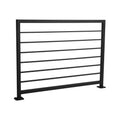
2. Horizontal Slat Steel Fence with Minimal Gaps
One of the biggest trends in 2026 is the horizontal slat fence, and when designed for security, it's incredibly effective. These fences feature horizontal steel or aluminum slats with minimal gaps between them, creating a modern, clean-lined barrier that's difficult to breach while maintaining a contemporary aesthetic.
The horizontal orientation does something clever: it makes small yards appear wider while the close spacing between slats provides privacy and security. Would-be intruders can't see what's on your property, can't easily find footholds to climb, and can't slip between the slats.
What's new in 2026: We're seeing more mixed-width designs where alternating slat widths create visual interest without compromising security. Dark matte finishes (especially matte black and charcoal) dominate because they create dramatic definition against lighter home exteriors.
Why we like this: It's the perfect modern security fence for contemporary homes. The clean lines feel intentional and designed rather than defensive, but make no mistake, this fence is secure.
Best for: Modern and contemporary homes, urban properties, anyone wanting privacy combined with security, properties with great architecture you want to complement rather than distract from.
3. Welded Steel Mesh Panels with Ornamental Frames
Industrial strength meets refined design. Welded steel mesh panels provide excellent security (you can't cut through welded mesh easily, and there are zero footholds for climbing) while the ornamental frames add architectural interest. This combination works beautifully for properties that need serious security but don't want an industrial appearance.
The mesh allows for visibility, which some homeowners prefer. You can see out, neighbors can see your well-maintained landscaping, but the barrier is undeniably strong. The ornamental frames (often wrought iron or steel with decorative posts and top rails) soften the industrial feel of the mesh.
Why this matters: The transparency created by mesh means your property doesn't feel closed off or claustrophobic, but the security level is genuinely high. We're also seeing integration of LED lighting along the frames, which enhances security while creating ambiance.
Our perspective: From our experience working with metal, we appreciate how welded mesh delivers exceptional protection while allowing light and air flow. The addition of ornamental framing transforms it from "warehouse fence" to "sophisticated security feature."
Best for: Properties with large perimeters, homes near busy areas where visibility is preferred, families with dogs (they can see out without feeling trapped), modern homes wanting industrial touches.
4. Tall Vertical Wrought Iron with Minimal Picket Spacing
When security is your absolute top priority, this is the fence to consider. Tall wrought iron fences (6 to 8 feet) with pickets spaced 4 inches apart or less create a barrier that's nearly impossible to breach. The close spacing eliminates handholds and footholds, the height deters climbing attempts, and wrought iron's strength means it can't be easily cut or broken.
What keeps this from looking like a prison fence is the quality of design and craftsmanship. Clean vertical lines, well-proportioned posts, quality finishes, and thoughtful details (like decorative post caps or subtle scrollwork at the top) transform a high-security fence into an architectural feature.
2026 updates: We're seeing more matte finishes replacing glossy ones, and geometric patterns in the upper portions of the fence adding visual interest while maintaining security below.
Our perspective: This fence delivers serious security for properties where protection is paramount (valuable collections, high-profile homeowners, properties in areas with security concerns). The quality of design and craftsmanship prevents it from looking institutional.
Best for: High-security needs, estate properties, homes with valuable contents, properties in areas with higher crime rates, anyone who prioritizes security above all else.
5. Wrought Iron Combined with Stone or Brick Columns
Here's where security meets serious curb appeal. Pairing wrought iron fencing with substantial stone or brick columns creates a fence that's both formidable and beautiful. The columns (typically placed every 6 to 8 feet) provide structural strength and visual weight, while the wrought iron sections deliver security through height and close picket spacing.
This combination has been around for centuries, but 2026 brings modern updates. We're seeing cleaner, less ornate column designs paired with simpler iron work for contemporary homes. For traditional properties, matching the columns to existing stone or brick on the house creates cohesive design.
Why this combination works: The stone or brick columns are extremely difficult to breach, providing anchor points for a strong fence. The visual impact is substantial, which itself deters potential intruders. And aesthetically, this combination feels permanent, valuable, and well-maintained.
From our experience: As metalworkers, we appreciate how wrought iron and masonry complement each other. These installations are unique because stone and brick bring natural variation, and the iron work can be customized to match the architectural style.
Best for: Traditional homes, properties with existing stone or brick elements, anyone wanting a fence that feels permanent and estate-like, front yard installations where curb appeal matters.
6. Steel Panel Fence with Integrated Lighting
Smart security in 2026 includes technology, and integrated lighting transforms a good security fence into an excellent one. Steel panel fences (either solid or slatted) with LED lighting built into posts or along top rails provide illumination that improves security dramatically while creating ambiance.
Motion-sensor lighting can activate when someone approaches your fence line, which both deters intruders and alerts you to activity. Constant low-level lighting eliminates dark spots where someone might attempt to breach your fence unnoticed. And aesthetically, well-designed fence lighting makes your property look intentional and cared-for.
What's trending: Warm LED strips under top rails create a subtle glow. Solar-powered options are gaining popularity for their sustainability and lower operating costs. Smart controls let you adjust lighting from your phone.
Why this trend matters: Lighting isn't just functional, it's transformative. A fence with integrated lighting goes from security feature to architectural moment. This approach creates stunning evening curb appeal while improving safety.
Best for: Modern homes, tech-forward homeowners, properties with dark areas needing illumination, anyone wanting their security fence to do double duty as landscape lighting.
7. Mixed Material Fence: Steel Frame with Wood Panels
Combining steel or wrought iron structural frames with wood infill panels creates security fences that feel warm and approachable while delivering genuine protection. The steel provides the security (strong posts, reinforced frames, durable construction), while wood adds visual warmth and privacy.
This approach is particularly smart for neighborhoods where full metal fences might feel too severe or where HOA guidelines prefer softer aesthetics. The steel ensures longevity and security, while wood can be stained or painted to match your home's style.
2026 approach: We're seeing dark steel frames (matte black or bronze) with natural wood tones (cedar, redwood, or ipe) creating beautiful contrast. Horizontal wood slats within vertical steel frames feel contemporary and intentional.
The reality: This gives you the best of both worlds. Steel's durability and security with wood's natural beauty and warmth. Maintenance is moderate (wood needs occasional treatment, steel needs minimal care), but the aesthetic payoff is significant.
Best for: Transitional and modern farmhouse homes, properties wanting privacy with security, neighborhoods with aesthetic guidelines, anyone wanting a security fence that doesn't look purely defensive.
Read also: How Much Do Wrought Iron Railings Cost
8. Aluminum Security Fence with Anti-Climb Features
Aluminum has come a long way, and modern aluminum security fences deliver serious protection with significantly less weight than steel or wrought iron. High-grade aluminum fencing with anti-climb features (close picket spacing, spiked or flat tops with no horizontal footholds, tall height) provides excellent security while being easier to install and maintain.
Aluminum won't rust, which makes it ideal for coastal properties or areas with heavy rainfall. Powder coating provides unlimited color options and UV protection. And because it's lighter, installation on slopes or challenging terrain is more feasible.
What's new: Commercial-grade aluminum is being used more in residential applications. Thicker gauge materials and welded construction (rather than rackable panels) create security-level fencing with aluminum's benefits.
Why this matters: For properties where rust is a concern or where installation needs to be less labor-intensive, aluminum delivers security without the weight and maintenance of iron.
Best for: Coastal properties, areas with heavy weather, anyone wanting low-maintenance security, properties with challenging installation terrain, pool security fencing.
9. Corrugated Metal Panels with Steel Posts
Industrial aesthetic meets modern security. Corrugated metal fencing (the ridged panels you see on industrial buildings) has made its way into residential security fencing, and when done thoughtfully, it's striking. Tall corrugated panels provide complete privacy and security, the ridged surface offers zero footholds for climbing, and the material is incredibly durable.
This works particularly well for modern, minimalist, or industrial-style homes where the aesthetic aligns with the architecture. Dark colors (black, charcoal, rust) help soften the industrial look, and pairing with landscaping (tall grasses, architectural plants) adds warmth.
2026 trend: Mixing corrugated sections with open wrought iron or horizontal slat sections creates variation and interest while maintaining security where needed.
The appeal: This isn't for everyone, but for the right property, it's bold and effective. It makes a statement while delivering serious security and privacy.
Best for: Modern and contemporary homes, urban properties, anyone wanting complete privacy with security, properties with industrial or minimalist architecture, side yards or areas where maximum privacy is desired.
10. Gothic-Style Wrought Iron with Arched Gates
For traditional or historic homes, Gothic-style wrought iron fencing brings period-appropriate beauty with inherent security features. These fences typically feature pointed arches, decorative spires, and intricate details that create visual interest while the close spacing and height provide security.
The real security moment comes with arched entry gates. A substantial wrought iron gate with Gothic details becomes a focal point that's both welcoming and protective. Modern additions like electronic access controls, intercoms, and automatic operators can be integrated without compromising the traditional aesthetic.
What makes this relevant in 2026: There's renewed appreciation for craftsmanship and historical design elements. Gothic-style fencing satisfies that desire while meeting modern security needs through quality materials and construction.
From a craftsman's perspective: These are the projects where traditional metalworking expertise really shines. Creating authentic-looking Gothic details requires skill and understanding of historical techniques, and the result is something truly special.
Best for: Victorian, Tudor, or historic homes, estate properties, anyone wanting security fencing that feels like an architectural feature rather than an addition, properties with period architecture to honor.
Fence vs. Railing: Understanding the Difference
We often get questions about the difference between fences and railings, and it's worth clarifying because the terms sometimes get confused, especially when both can be made from similar materials like wrought iron or steel.
What Is a Fence?
A fence is a freestanding barrier structure designed to enclose an area, mark property boundaries, provide security, or create privacy. Fences are typically installed around the perimeter of a property, around yards, or to separate different areas of land. They're anchored into the ground with posts set in concrete and don't rely on a building structure for support.
Key characteristics of fences:
-
Freestanding structures that create boundaries
-
Installed around property perimeters or to section off areas
-
Can be any height (though local codes may restrict this)
-
Primary purposes include security, privacy, boundary marking, and containing pets or livestock
-
Examples include wrought iron perimeter fences, privacy fences, picket fences, security fences
What Is a Railing (or Guardrail)?
A railing is a protective barrier system attached to a structure like stairs, decks, balconies, or elevated areas. Railings prevent falls and provide something to grip for support. Unlike fences, railings are always attached to an existing structure (building, deck, stairway) and serve primarily as safety features.
Key characteristics of railings:
-
Attached to existing structures (stairs, decks, balconies, porches)
-
Primary purpose is fall prevention and support
-
Must meet specific building codes for height, spacing, and strength
-
Include handrails (the part you grip) and guardrails (the barrier portion)
-
Examples include deck railings, stair handrails, balcony guardrails, porch railings
The Practical Difference
The easiest way to remember the difference: Fences define and protect space on the ground level. Railings protect people on elevated structures.
If you're surrounding your property with a barrier, that's a fence. If you're adding protection to your deck, stairs, or balcony, that's a railing.
While fences and railings can be made from similar materials like wrought iron and steel, they serve different purposes and are installed in different ways. A fence around your front yard establishes your property boundary and provides security. A railing on your front porch steps provides safety and support.
Can they look similar? Absolutely. You might have matching wrought iron fencing around your property and wrought iron railings on your porch, creating a cohesive design aesthetic. But the installation, purpose, and building code requirements are different.
Do you need permits for both? Typically yes, though requirements vary by location. Fences usually require permits based on height and location relative to property lines. Railings require permits because they're safety features with specific code requirements.
Conclusion
Security fencing in 2026 proves that protection and beauty aren't mutually exclusive. Whether you're drawn to traditional wrought iron with spear tops, modern horizontal slat designs, or innovative combinations of materials and technology, there's a security fence solution that fits your home's style and your security needs.
The best security fence for your home depends on your specific needs, your property's architecture, and your personal aesthetic preferences. Whatever you choose, prioritize quality materials, solid construction, and professional installation. A security fence is only as good as its weakest point.
At Steel Impressions, while we specialize in handrails and railings, we understand the importance of quality metalwork throughout your property. Our three generations of experience working with wrought iron and steel give us deep appreciation for craftsmanship, whether it's in a security fence around your perimeter or a handrail on your front steps.
Your home deserves both security and beauty. The right combination of quality fencing and professional railings can deliver both.


