

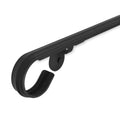
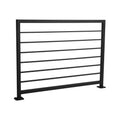


If you think handrails are only for your main staircase, you're missing out on dozens of opportunities to make your home safer, more accessible, and frankly, more valuable. Most homeowners stop at the obvious spot - that big interior staircase - and call it a day. But here's what we've learned after years of installing wrought iron railings across every type of home imaginable: the places where people actually need handrails most are often the places they least expect.
This isn't just about checking boxes or meeting code requirements. It's about understanding how people actually move through their homes, where balance becomes tricky, and where a simple handrail can be the difference between confidence and caution - or worse, between staying upright and taking a fall.
Whether you live in a sprawling ranch in Texas, a classic Colonial in New England, a split-level in the Midwest, or a California bungalow, your home has transition points, elevation changes, and tricky spots that would benefit from a handrail. Some are obvious once you start thinking about them. Others might surprise you.
We're going to walk through every area of your home - inside and out - where adding a handrail makes practical sense. You'll learn who benefits most from each location, why these spots matter, and how to think about handrail placement in a way that works for your specific home style. By the end, you'll have a complete picture of where handrails belong, and you might even wonder why you waited so long to add them.
Inside Your Home: The Hidden Opportunities
Let's start indoors, where most people spend the majority of their time. Beyond that main staircase, there are numerous spots where handrails provide crucial support.
Basement Stairs
Basement stairs are notoriously steep, often poorly lit, and frequently the site of falls - especially when you're carrying laundry, storage boxes, or tools. Yet countless homes have basement stairs with no handrail, or just one on the open side.
Why it matters: Basement stairs typically have a steeper pitch than main stairs due to space constraints. The combination of steepness, poor lighting, and the likelihood of carrying items makes these stairs particularly hazardous.
Who benefits most: Anyone using the basement regularly, particularly for laundry. Elderly family members, people with balance issues, and anyone carrying loads will find these handrails essential. If your basement is finished living space, proper handrails aren't optional—they're necessary.
Installation considerations: For wrought iron, wall-mounted rails work well on enclosed basement stairs. If one side is open, consider a floor-mounted system with posts and a continuous handrail. Make sure to extend the handrail beyond the last step at both top and bottom.
Single Steps and Small Level Changes
This is the sneaky one. That single step down into your family room, the step up into your addition, or the transition from your kitchen to your sunken living room—these are fall hazards hiding in plain sight.
Why it matters: Single steps are dangerous precisely because they're unexpected. You're walking through your home, not thinking about stairs, and suddenly there's a level change. Your brain doesn't switch into "stair mode," and that's when people trip.
Who benefits most: Elderly residents, anyone with vision impairments, guests who aren't familiar with your home layout, and honestly, everyone. Even young, healthy people trip on single steps, especially in low light or when distracted.
Installation considerations: A short wall-mounted handrail—even just 2-3 feet long—can make a huge difference. With wrought iron, we can fabricate compact handrails that don't visually overwhelm the space but provide that crucial support. Consider installing on both sides if the opening is wide.
Sunken Living Rooms
If you've got a home from the '60s or '70s, you might have one of those trendy sunken living rooms. They were all the rage back then, and some modern homes are even bringing them back. But they need handrails.
Why it matters: The steps into sunken living rooms are often in high-traffic areas, creating a constant tripping hazard. Because they're integrated into the living space rather than feeling like "stairs," people don't approach them with appropriate caution.
Who benefits most: Everyone who uses that space, but especially older family members and guests. Sunken living rooms are particularly hazardous for people with mobility challenges because they interrupt the natural flow of movement through the home.
Installation considerations: The railing here needs to balance safety with aesthetics since it's in a prominent living space. Wrought iron offers a perfect solution—you can create railings that are sturdy enough for safety but elegant enough to look intentional rather than institutional. Consider a continuous handrail along the step edge, or posts with a top rail depending on the configuration.
Long Hallways
In ranch homes, particularly larger ones, hallways can be surprisingly long. The same goes for the hallways in split-level homes connecting different wings. For people with limited endurance or balance issues, these long stretches without support can be exhausting or even frightening.
Why it matters: Long hallways mean extended periods of walking without anything to hold onto. For elderly residents or those recovering from surgery or illness, this can be a genuine barrier to moving independently through their own home.
Who benefits most: Elderly residents, people with chronic conditions affecting balance or endurance, anyone recovering from surgery or illness, and people with progressive conditions like Parkinson's or multiple sclerosis.
Installation considerations: Wall-mounted continuous handrails work beautifully in hallways. Mount them at standard height (34-38 inches) and ensure they're secured into studs. Wrought iron hallway rails can be finished to match your décor—we've installed everything from brushed nickel to oil-rubbed bronze to matte black depending on the home's style.
Garage Entry Steps
Most homes have a step or two leading from the garage into the house. People use this entrance constantly—coming home with groceries, taking out trash, carrying tools or sports equipment. It's high-traffic and often cluttered, yet many homes have no handrail here.
Why it matters: You're usually carrying something when you use garage steps, which means you don't have both hands free to catch yourself if you stumble. Add in dim lighting, wet shoes on rainy days, and the general chaos of a garage, and you've got a recipe for falls.
Who benefits most: Everyone, but particularly parents with young children, elderly homeowners, and anyone who uses the garage as their primary entrance (which, let's be honest, is most people).
Installation considerations: Garage steps often connect to concrete or concrete block walls, which require different mounting techniques than interior drywall. Wrought iron works exceptionally well here because it's durable and can handle the temperature fluctuations and occasional moisture of a garage environment. Use proper concrete anchors and ensure the handrail extends beyond the top and bottom steps.
Laundry Room Transitions
In split-level homes and some ranch configurations, the laundry room might be on a different level—maybe a few steps down into a basement laundry area, or steps up to a second-floor laundry. These transitions happen when you're typically carrying a full laundry basket that blocks your view of your feet.
Why it matters: Carrying laundry creates a perfect storm of risk factors: obscured vision, awkward load distribution, and distraction. Falls on laundry room steps are common and can be serious.
Who benefits most: Whoever does the laundry (let's not pretend it's always shared equally), elderly family members, and anyone with balance concerns.
Installation considerations: Even a short handrail makes a dramatic difference. Wall-mounted is usually the best option here since these areas tend to be tight on space. Make sure the handrail doesn't interfere with carrying laundry baskets past it.
Attic Access Stairs
Pull-down attic stairs or permanent attic stairs are often narrow and steep. If you use your attic for storage or as a living space, safe access is crucial.
Why it matters: Attic stairs are typically steeper than standard stairs and are used less frequently, which means you're not as practiced navigating them. You're also usually carrying boxes or items up and down, which affects balance.
Who benefits most: Anyone accessing the attic regularly, particularly homeowners using attic storage.
Installation considerations: For permanent attic stairs, wall-mounted handrails on both sides if space allows. For pull-down stairs, at least one grab handle at the top of the opening can help with the transition.
Bathroom Support (Not Full Railings, But Worth Mentioning)
While we're focusing on handrails for stairs and transitions, it's worth noting that bathrooms benefit from grab bars near toilets, tubs, and showers. These aren't exactly handrails, but they serve a similar purpose.
Why it matters: Bathrooms are slippery, and transitions from sitting to standing (toilet, tub) or stepping over tub edges are common fall locations.
Who benefits most: Elderly residents, people with mobility challenges, anyone recovering from surgery, and frankly, anyone who wants to age in place safely.
Installation considerations: Grab bars need to be mounted into solid blocking or studs—never just into drywall, even with anchors. They need to support full body weight. While we specialize in wrought iron railings, grab bars are typically stainless steel or brass for wet environments.
Read also: Modern Wrought Iron Railing Ideas for Your Front Porch
House Type Considerations
Different architectural styles present unique opportunities for handrail placement. Let's look at the most common house types across the United States and where handrails make the most sense for each.
Ranch Homes (Most Popular in the Midwest and Widespread Nationally)
Ranch homes are single-story designs with everything on one level—except when they're not. Many ranches have a basement accessed by steep stairs, and some have a step or two down into certain rooms or split levels within the main floor.
Key handrail locations:
-
Basement stairs (often steeper than standard)
-
Single steps between room levels
-
Entry steps from the garage (usually 1-2 steps)
-
Long hallways for elderly residents
-
Front entry steps (typically 1-3 steps from ground level)
Why these matter in ranches: The single-story design means people aren't expecting elevation changes, making those single steps particularly hazardous. Long hallways in larger ranches create extended distances without support.
Split-Level Homes (Common in the East and Midwest, Popular 1950s-1970s)
Split-levels are designed with living spaces on different levels connected by short flights of stairs. The entry is typically mid-level, with stairs going up to bedrooms and down to family room/garage.
Key handrail locations:
-
Interior split-level transitions (connecting all the different levels)
-
Short stair flights between levels
-
Garage to main level stairs
-
Basement laundry access
-
Entry foyer steps to upper and lower levels
Why these matter in split-levels: The whole house is about level changes. Every transition point is a potential fall hazard, and residents traverse these stairs multiple times daily. Many older split-levels were built with minimal or substandard railings.
Colonial Homes (Dominant in New England and the Northeast)
Colonials are classic two-story homes with formal layouts. Main living on the first floor, bedrooms on the second.
Key handrail locations:
-
Main staircase (this one's obvious)
-
Basement stairs (often from kitchen or hallway)
-
Attic access stairs
-
Front entry steps (often a few steps up to the front door)
-
Back deck or patio steps
-
Garage entry if attached
Why these matter in colonials: Colonials typically have good main staircase railings, but basement stairs are often neglected. Many colonials are older homes where the original handrails don't meet modern standards.
Bungalows and Craftsman Homes (Popular on the West Coast and in the South)
These are typically 1-1.5 story homes with main living downstairs and possibly bedrooms upstairs or in a finished attic. They often feature front porches with steps.
Key handrail locations:
-
Front porch steps (often 3-5 steps)
-
Interior stairs to second floor or attic bedrooms
-
Basement stairs (if applicable)
-
Back porch or deck steps
-
Any level changes between rooms (common in older bungalows)
Why these matter in bungalows: The front porch is a defining feature, and those steps are used constantly. Interior stairs in bungalows are often steep due to the compact design. Bungalows were often built for efficiency and aging in place, making proper handrails particularly appropriate.
Contemporary/Modern Homes (Widespread, Particularly in Urban and Suburban Areas)
Modern homes feature open floor plans but often include interesting level changes, floating stairs, and indoor-outdoor transitions.
Key handrail locations:
-
Floating or open staircase (needs railing even if it looks sleek)
-
Steps to sunken living areas (making a comeback in modern design)
-
Deck and patio transitions
-
Rooftop deck access
-
Multiple entry level changes
Why these matter in contemporary homes: Modern design sometimes prioritizes aesthetics over safety. Floating stairs without adequate railings, sunken areas without transition support, and minimalist designs can all create fall hazards. Wrought iron actually works beautifully in modern homes—the clean lines and customizable finishes complement contemporary aesthetics while providing necessary safety.
Cape Cod Homes (Common in New England and Coastal Areas)
Cape Cods are compact 1.5-story homes with bedrooms often under sloped rooflines on the second floor.
Key handrail locations:
-
Interior stairs to second floor
-
Basement stairs
-
Front entry steps
-
Attic/storage access
-
Deck or back porch steps
Why these matter in Cape Cods: The compact design often means steeper-than-standard stairs. Second-floor bedrooms under the roof slope can create awkward transition points that benefit from grab support even if not full handrails.
Outdoor Handrail Locations: Don't Forget the Exterior
Your outdoor spaces need just as much attention as the interior - maybe more, since weather adds another layer of risk.
Front Entry Steps
Whether you've got one step or ten, front entry steps are used constantly by residents and guests. Ice, rain, snow, leaves - all make these steps treacherous.
Why it matters: Front steps are your primary access point. They're exposed to weather, often shaded (slow to dry or melt), and used by everyone from delivery drivers to elderly relatives visiting.
Who benefits most: Everyone, but particularly elderly visitors, guests unfamiliar with your property, delivery personnel, and residents during bad weather.
Installation considerations: Wrought iron is ideal for exterior steps because it's durable, weather-resistant when properly finished, and looks elegant. Install handrails on both sides if possible, and ensure they extend at least 12 inches beyond the top and bottom steps. Consider contrast in finish (black against light-colored house or siding) for visibility.
Back Deck or Patio Steps
Deck stairs are often steeper than interior stairs and are exposed to weather. Add wet feet from a pool or hot tub, and these become particularly hazardous.
Why it matters: You're often barefoot or in socks, carrying food or drinks, or distracted by conversation when using deck steps. Wet wood or composite decking is slippery, and the transition from deck to yard can be jarring.
Who benefits most: Families with children, elderly residents, anyone hosting gatherings, and pool or hot tub owners.
Installation considerations: Deck railings need to be particularly robust since they're exposed to weather year-round. Wrought iron with proper powder-coating or galvanization will outlast wood and won't rot or deteriorate like some other materials. Ensure posts are securely bolted through the deck into substantial framing.

Single Front or Back Step
Many homes have just one or two steps from the door to a sidewalk or patio. People often skip handrails here because it "doesn't seem necessary." It is.
Why it matters: Single steps are the most dangerous because they're unexpected. You're leaving or entering the house, thinking about something else, and that one step catches you off guard.
Who benefits most: Elderly residents and visitors, anyone with packages or groceries, parents with young children, and people leaving or entering in low light.
Installation considerations: Even a short 2-3 foot handrail makes a difference. For a single step, a simple U-shaped grab rail mounted to the wall of the house can be both functional and unobtrusive. Wrought iron can be custom-fabricated to any length needed.
Sloped Driveways or Walkways
If your driveway or walkway has significant slope, a handrail along the side can make it much more accessible, especially in winter.
Why it matters: Slopes are difficult for people with mobility issues, and they become dangerous when wet or icy. A handrail provides both balance support and emergency stopping power if you start to slip.
Who benefits most: Elderly residents, anyone with mobility challenges, residents during winter in cold climates, and people recovering from injuries.
Installation considerations: This is a less common application, but it's incredibly valuable for those who need it. The handrail can run along the edge of the driveway or walkway, mounted to short posts set in concrete. Powder-coated wrought iron is ideal because it needs to withstand constant weather exposure.
Pool Areas
Pool ladders and steps need handrails for safe entry and exit, especially when wet.
Why it matters: Wet pool decks are slippery, and the transition from deck to pool involves navigating water, depth changes, and slippery surfaces—all while partially disrobed and potentially distracted.
Who benefits most: Elderly swimmers, children, anyone with mobility issues, and really anyone using the pool safely.
Installation considerations: Pool handrails need to be stainless steel or specially coated to handle constant water exposure and pool chemicals. While this is a bit outside our typical wrought iron wheelhouse, the same principles of proper mounting and support apply.
Garage Apron/Driveway to Door
The path from where you park to your door—whether it's garage to house or driveway to front entrance - often involves elevation changes.
Why it matters: You're typically carrying things (groceries, briefcase, packages), your hands aren't free, and you're making this trip multiple times a day. Bad weather adds extra risk.
Who benefits most: Primary residents, elderly family members, anyone making frequent trips with loads.
Installation considerations: Install handrails at any steps or significant slopes along this path. Wall-mounted works if there's a house wall adjacent; otherwise floor-mounted posts with handrails. Think about traffic patterns—don't create obstacles, but do provide support where needed.
Garden Steps and Pathways
If you have terraced gardens, steps down to a lower yard level, or stairs built into a sloped property, handrails make these features safer and more usable.
Why it matters: Garden steps are often irregular, made from materials that become slippery when wet (stone, brick, wood), and are used less frequently than other stairs, making them less familiar.
Who benefits most: Gardeners, elderly residents, anyone who wants to enjoy their full property safely.
Installation considerations: Wrought iron is perfect for garden applications—it's durable, looks appropriate in outdoor settings, and can be finished to complement the garden aesthetic. Consider railings that work with the natural landscape rather than fighting against it.
Read also: Types of Handrails for Outdoor Steps: A Comprehensive Guide
Who Benefits Most: A Comprehensive Look
While we've touched on this throughout, let's consolidate who really needs these additional handrails:
Elderly Residents (65+): Balance decreases with age, reaction time slows, bone density decreases (making fall injuries more serious), and many have chronic conditions affecting mobility. Every handrail location we've discussed benefits this group enormously.
People with Disabilities or Mobility Challenges: Whether permanent or temporary, mobility limitations make handrails essential rather than optional. This includes people using mobility aids, those recovering from surgery, people with arthritis, and anyone with conditions affecting balance or strength.
Young Children: Kids are still developing coordination and spatial awareness. Handrails scaled for adult use aren't ideal for small children, but they still provide some assistance and protection.
Pregnant Women: Balance shifts dramatically during pregnancy due to body changes and weight distribution. Handrails provide crucial support, especially in the third trimester.
Anyone Recovering from Injury or Surgery: Temporary mobility limitations make previously easy transitions difficult. Having handrails already installed when someone comes home from the hospital makes recovery at home safer and more feasible.
People with Vision Impairments: When you can't clearly see elevation changes, handrails provide both physical support and spatial awareness—they tell you a transition is coming.
Aging in Place: If your plan is to stay in your home as you age (and for most people, it is), installing handrails now means you're preparing for future needs. It's much easier to install them when you're healthy and able than to scramble to add them during a health crisis.
Multi-generational Households: If you have elderly parents living with you, or if you're planning for that possibility, comprehensive handrails make your home safer and more welcoming for everyone.
Making the Investment: Why Handrails Are Worth It
Some people hesitate to add handrails because they worry about the cost, the installation effort, or the aesthetic impact. Let's address those concerns:
Return on Investment: Homes with accessibility features command higher prices and sell faster. Handrails are a visible indicator that a home has been maintained with safety in mind, which appeals to a broad range of buyers, particularly those thinking about aging in place.
Insurance Considerations: Some insurers look favorably on safety improvements. While it varies by company, having proper handrails throughout your home could potentially impact your liability coverage favorably.
Peace of Mind: There's a value you can't quantify—knowing your home is safe for everyone who uses it. Not worrying every time an elderly relative visits. Not holding your breath when you hear someone on the basement stairs. That's worth something.
Preventing Injury Costs: Falls are expensive. Medical bills, lost work time, potential long-term care needs—preventing even one serious fall pays for handrails many times over.
Aesthetic Solutions Exist: Modern handrail options, particularly custom wrought iron, can be beautiful. They don't have to look institutional or medical. Ours are designed to complement your home's architecture and can be finished to match any décor.
Practical Next Steps
If you're feeling overwhelmed by all these possibilities, here's how to approach it:
-
Do a Walk-Through: Go through your home—inside and out—and note every elevation change, every transition point, and every place where you've ever had to think about your balance or footing.
-
Prioritize by Use and Risk: Focus first on high-traffic areas and places with the greatest fall risk. Basement stairs probably come before garden steps for most people.
-
Consider Current and Future Needs: If you're young and healthy now, you might not need every handrail immediately. But if you're planning to age in place, or if elderly relatives visit regularly, think about future needs.
-
Budget Appropriately: You don't have to do everything at once. Start with the most critical locations and add others as budget allows.
-
Choose Quality Materials: This isn't the place to cut corners. Handrails need to support body weight and handle significant force. Proper installation matters enormously—a poorly installed handrail is worse than no handrail because it gives false confidence.
-
Work with Professionals: While some handrail installations are DIY-friendly, many require expertise to ensure proper mounting, especially in concrete, masonry, or load-bearing situations. We've seen too many handrails that look fine but aren't actually secure enough to trust in an emergency.
Conclusion
Your main staircase is just the beginning. Every home has multiple locations where handrails provide crucial support, prevent falls, and make daily life easier and safer. Whether you live in a ranch, colonial, split-level, bungalow, or contemporary home, there are spots beyond the obvious staircase where handrails belong.
The beauty of wrought iron is that these safety features don't have to look like safety features. They can be elegant, customized to your home's style, and built to last for generations. We've installed handrails in every configuration imaginable, from simple 2-foot grab rails at single steps to comprehensive systems covering multiple indoor and outdoor locations.
Don't wait for a fall or a scare to take action. Look at your home with fresh eyes, identify the transition points and elevation changes, and make a plan to add support where it's needed. Your future self—and your family—will thank you.
And if you're not sure where to start or what makes sense for your specific home, that's exactly what we're here for. We've helped hundreds of homeowners think through their properties and identify the locations where handrails will make the biggest difference. Because at the end of the day, safety isn't about following a checklist—it's about understanding how people actually use a space and making sure they can do so confidently and securely.


