


You know that feeling when you're heading upstairs with a laundry basket, coffee cup, or armful of groceries, and you reach for the railing only to feel it shift under your hand? Yeah, that moment of panic where you're suddenly very aware of gravity and your own mortality. Not fun.
I've been working with wrought iron railings for years now, and I can tell you that wobbly railings are one of the most common calls we get. The thing is, most people live with that wobble way longer than they should. They'll mention it casually - "Oh yeah, that railing's been loose for like six months" - as if it's just a quirky feature of their home and not an actual safety hazard.
Here's the truth: a loose railing might seem like a minor annoyance, but it's one of those things that can go from "I should fix that" to "I really wish I'd fixed that" in about half a second. The good news? Most railing problems are surprisingly fixable, even if you're not particularly handy. I'm going to walk you through why railings get loose, how to diagnose what's going on with yours, and the most effective fixes I've seen work over the years.
Some of these you can tackle on a Saturday morning with basic tools. Others might need a professional touch. Either way, you'll know exactly what you're dealing with by the end of this.
Why Do Railings Get Loose Anyway?
Let's start with the "why" because understanding what's happening makes the fix make a lot more sense.
Normal Wear and Tear
Every single time someone grabs your railing, they're applying force to it. Sometimes it's just a light touch for balance. Other times it's someone catching themselves mid-stumble or a teenager taking the stairs two at a time while using the railing like a launch pad. All that repeated stress - day after day, year after year - works on the connection points.
Think of it like this: you know how a screw in a cabinet door will gradually work itself loose just from opening and closing the door? Same principle, except railings deal with forces coming from multiple directions. Someone pulling down on the handrail while climbing up puts different stress than someone leaning their weight on it while going down. Over time, those bolts, screws, and anchors start to wiggle free.
With wrought iron railings specifically, the weight of the metal itself is also a factor. Iron is heavy - solid and beautiful, but heavy. That weight creates constant downward pressure on the mounting points, and if those weren't installed with that weight in mind from the start, things shift.
The Wood Factor
If your wrought iron railing is mounted into wood - whether that's wooden stair treads, a wood deck, or wood posts - you've got another variable in play. Wood is organic, which means it expands and contracts with humidity changes. More importantly, it can rot.
I've pulled up what looked like perfectly fine base plates to find the wood underneath soft and spongy, especially on outdoor installations or in basements where moisture is an issue. Once that wood loses its integrity, even properly installed bolts don't have anything solid to grip. You could tighten them until your wrench breaks, and that railing will still wobble because the bolts are just spinning in compromised wood.
Wood railings have their own set of issues - the balusters can loosen where they connect to the handrail and the base rail, and the handrail itself can crack or split over time, especially if it wasn't properly sealed.
Poor Initial Installation
Let's be honest - not every installation is done right the first time. Sometimes it's a DIY job by the previous homeowner who didn't quite know what they were doing. Sometimes it's a contractor who took shortcuts to save time. Sometimes the right materials just weren't available, so someone made do with what they had.
Common installation mistakes I see all the time:
-
Using anchors that aren't rated for the weight of the railing
-
Not drilling deep enough into concrete
-
Mounting into drywall instead of studs
-
Skipping brackets to save money (spoiler: you need those brackets)
-
Using too few bolts or bolts that are too short
-
Not accounting for the leverage forces on railings
With wrought iron, there's also the welding factor. If the connections between components weren't welded properly - or weren't welded at all when they should have been - you can have failure points within the railing structure itself.
Your House Is Alive (Sort Of)
Houses move. They settle. The ground shifts beneath them. Temperature changes make materials expand and contract. This is all completely normal, but it can affect your railings over time.
Concrete slabs can develop hairline cracks. The spot where your railing post is anchored might not be as solid as it was ten years ago. Deck joists can shift slightly as the wood ages. Even stone or tile stairs can have movement in the mortar joints.
This kind of structural shift is usually so gradual you don't notice it, but your railing notices. That perfectly rigid installation becomes slightly less perfect, and once there's any movement at all, it tends to get worse rather than better.
Diagnosing Your Wobbly Railing
Before you grab tools and start tightening things randomly, it's worth spending a few minutes figuring out exactly what's loose and why. This'll save you time and ensure you're actually fixing the problem instead of just treating symptoms.
The Shake Test: Grab your railing at different points and give it a firm shake. Not a violent shake - you're testing it, not trying to rip it out of the wall - but a good solid movement. Does it wobble at the top, the bottom, or all over? Does one section move while another feels solid?
Visual Inspection: Get down at floor level and look at where the posts meet the ground or stairs. Are the base plates sitting flush, or can you see gaps? Are there rust stains or water damage? Check up high too—look at how the handrail connects to the posts and where it meets the wall if you have wall brackets.
The Bolt Check: Can you see the mounting hardware? If you've got exposed bolts on base plates (common with wrought iron), are they tight against the surface or are the heads sitting up proud? Sometimes you can literally see that things have backed out.
The Wiggle Source: When you shake the railing, try to pinpoint exactly where the movement is coming from. Is the whole post moving at the base? Is the handrail sliding within its mounting brackets? Are individual balusters (those vertical pieces between posts) loose? The fix for each of these is different.
The Fixes: From Easiest to More Involved
Level One: Tighten Everything
Start simple. I mean it - don't skip straight to the complicated fixes when the solution might just be taking a wrench to some loose bolts.
For wrought iron railings, look at those base plates where posts meet the floor. Most have four bolts, sometimes six. Get the right socket wrench or adjustable wrench and snug them down. You want them tight, but there's a limit—if you overtighten, you can strip threads or crack the plate. Tighten until firm, then maybe a quarter turn more.
Check the handrail connections too. Many wrought iron handrails are attached to posts with set screws - little Allen-head screws that tighten against the post. These back out constantly. A set of Allen keys and thirty seconds per connection point can often solve half your wobble.
If you've got wall-mounted brackets holding up your handrail, check those screws. They should be driven into studs, and over time they can work loose. Tightening these can eliminate that side-to-side wobble in the handrail.
For wood railings, you're looking at similar principles but usually with screws instead of bolts. Check where balusters connect at top and bottom. Check the newel posts at the top and bottom of your staircase - these are the big structural posts, and if they're loose, everything else will be too.
Level Two: Replace Compromised Hardware
Sometimes tightening doesn't work because the hardware itself is the problem. This is especially true with outdoor railings where rust and corrosion are factors.
If you've got rusty bolts, replace them. If you've got bolts that spin freely without tightening, the threads are stripped - replace them. With wrought iron, I always recommend going with galvanized or stainless steel hardware. Yes, it costs more, but it's worth it. Regular steel bolts will rust, and then you're doing this whole job again in a couple years.
Here's a pro tip: if the holes in your mounting surface have gotten worn or oversized from movement, go up a size on your bolts. If you were using 3/8" bolts, try 1/2". This gives you fresh material to bite into. Just make sure your base plate holes can accommodate the larger size - you might need to drill those out slightly.
For wood installations, switching to longer screws can make a huge difference. Maybe the original installation used 2-inch screws, but there's solid wood deeper down. Going to 3-inch or even 4-inch screws gives you much better holding power, especially if the surface wood has degraded.
Level Three: Add Support Brackets
One of the most common issues I see, especially on longer runs of railing, is insufficient support. The handrail should be supported every 3 to 4 feet. If yours has longer unsupported spans, that's asking for trouble.
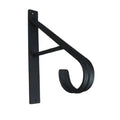
Wall brackets are your friend here. For wrought iron railings, you can usually find brackets that match your existing style, or we can fabricate custom ones. The key is mounting them properly—you've got to hit those wall studs. Use a stud finder, mark your studs, and drive 3-inch screws minimum into solid wood.
If you're mounting into a masonry wall, you'll need masonry anchors rated for the weight and force involved. Wrought iron isn't light, and the leverage forces on a handrail are significant.
Sometimes you need additional vertical support too. If you've got a particularly long run between posts, adding another post in the middle can solve structural wobble issues. This is more involved, obviously, but sometimes it's the right answer.
Level Four: Address the Foundation
This is where things get more serious. If your mounting surface is the problem, you've got to fix that before anything else will help.
Rotted Wood: If you're dealing with rot, you can't just bolt through it and hope for the best. Cut out the damaged wood. Depending on the extent, you might be able to sister in a new piece of lumber alongside the damaged area, or you might need to replace the whole board. Once you've got solid wood, you can remount your railing properly.
For deck installations, check the rim joists and the deck boards where posts are mounted. These are high-exposure areas that take a beating from weather. If there's rot, deal with it properly—it won't get better on its own.
Concrete Issues: Crumbling concrete or failed anchors in concrete are trickier. If the concrete around your anchor holes is damaged, those holes are done. You've got a few options:
You can use epoxy to fill the old holes and stabilize the surrounding concrete, then drill new holes a few inches away and use proper concrete wedge anchors. For heavy wrought iron posts, I prefer wedge anchors or sleeve anchors over expansion anchors—they provide better holding power.
If the concrete is seriously degraded, you might need to patch or even pour new concrete. This sounds dramatic, but it's not as bad as it seems. Chip out the loose stuff, clean it thoroughly, and use a high-quality concrete repair product.
Level Five: Structural Reinforcement
Sometimes a railing is loose because it just needs to be beefier. This is where custom metalwork comes in handy.
For wrought iron posts that are undersized for their application, we can weld on a larger base plate to distribute the load over more anchor points. Instead of four bolts, maybe you need six or eight. Instead of a 4-inch base plate, maybe you need 6 inches.
You can also add reinforcement collars—pieces that wrap around the post at the base to stiffen it and provide additional connection points. This is especially useful if you can't easily replace the existing post but need more stability.
For aluminum railings (pretty common on outdoor stairs and decks), reinforcement usually means adding thicker-gauge components or additional support posts. Aluminum is lighter than wrought iron, which is nice, but it's also less rigid, so it needs proper engineering.
When to Call a Professional
I'm all for DIY when it makes sense, but there are times when calling someone who does this for a living is the smart move.
If there's structural damage: Bent posts, cracked welds, serious concrete failure—these need professional assessment and repair.
If you're dealing with complex installations: Multi-level railings, curved railings, or situations where you'd need to do custom fabrication.
If you're just not comfortable with it: There's no shame in hiring someone. Railings are safety equipment, and they need to be done right.
If your fixes aren't working: If you've tightened everything, replaced hardware, and it's still wobbling, there's something else going on that needs experienced eyes on it.
Keeping Your Railings Solid
Once you've got things fixed, a little maintenance goes a long way. Check your railings twice a year - spring and fall work great as reminder times. Just walk around, give everything a good shake, and tighten anything that's started to loosen.
For outdoor wrought iron, keep an eye out for rust. Touch up any chips in the finish before moisture can get to the bare metal. For wood, maintain the finish - stain, paint, or sealer depending on what you've got.
And honestly, if you're installing new railings, invest in quality from the start. Proper materials, proper installation, and proper hardware mean you won't be dealing with wobbles for years to come. We build our wrought iron railings to last, with engineering that accounts for the forces they'll face and hardware that can handle the job. It costs more upfront, but you're not back on a ladder five years later cursing the person who installed them.
Your railing is there for your safety. Don't ignore that wobble. Fix it, and fix it right. Your future self - probably carrying something awkward and heavy while taking the stairs a little too fast - will be glad you did.


